The law court or the market? How should we share designs?

The law court or the market? How should we share designs?

  Jenuarrie, Aboriginal designer from Cairns helps light the lamp for the inauguration of Make it New A core element of the Sangam Project is a set of standards for best practice, resulting from dialogue across the network. The Make it New Again: Models for Innovation in Traditional Craft conference at NID in Ahmedabad identified...
Kondapalli craft: You can’t have money without meaning

Kondapalli craft: You can’t have money without meaning

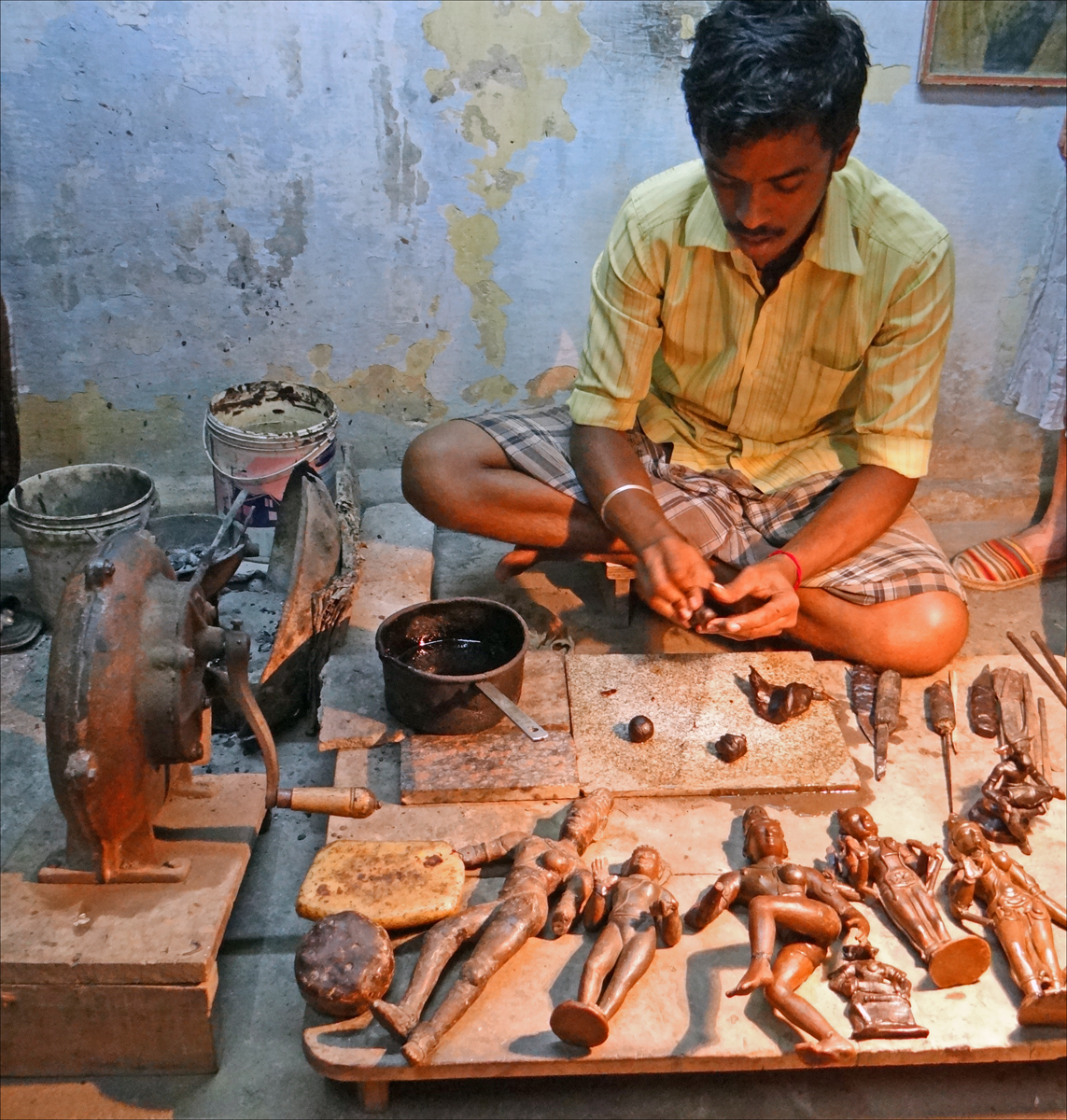
Kondapalli wooden figures representing ordinary people In order to understand a craft, it is important to not only understand it from the technical-economic point of view but also to understand the spirit behind it – the meaning the craft holds for the craft community. There are crafts which slowly languish and die not only because...
When an Indian designer comes to Australia...

When an Indian designer comes to Australia…

The recent ‘Through Indian Eyes’ hypothetical forum at the Powerhouse Museum reveal some surprising common ground between traditional craft in India and modern life in Australia. An Indian comes to Australia to revive a craft skill that had been outmoded by technological change… Wait a minute, shouldn’t it be the other way around? The ‘Through...
Fashion design with a conscience

Fashion design with a conscience

Western designers working with traditional artisans in India creating products for a consumer market with an ethical consciousness. How can the designers contribute to the artisan communities in a sustainable way? Bhukhu the applique embroiderer Bhukhu is an appliqué embroiderer from the small village of Marharbat, near Barmer in Rajasthan, India. She is sixty-four years...
Put a name to it: Standards for Labelling

Put a name to it: Standards for Labelling

Roundtable in Delhi October 2011 The Australia India Design Platform seeks to gather views around standards for creative partnerships between designers and artisans. One contentious standard concerns whether the name of the artisan(s) should feature on the label. There are positive reasons for this, not only related to fairness, but also the value added by...
Latest entries
One versus Many: Where Different creative economies meet

One versus Many: Where Different creative economies meet

One versus many: Western concepts of intellectual property meet Indian openness of tradition 16 May 2013, 2pm-330pm, Queensland Gallery of Modern Art, Southbank, Brisbane When musicians, dancers, artists and designers from India and Western countries like Australia come together to collaborate, they often find different values about ownership of what’s produced. The Western concept of...
Learning to weave in Bangalore

Learning to weave in Bangalore

Alison Hussey reports on her hands on experience learning from traditional weavers, and how it is giving way to the IT industry For many of us with an interest in hand-crafted textiles, we learn about the art and skill of weaving and embellishment by buying textiles that look interesting to us. If we’re lucky, we...
Rashidji: The Block Maker

Rashidji: The Block Maker

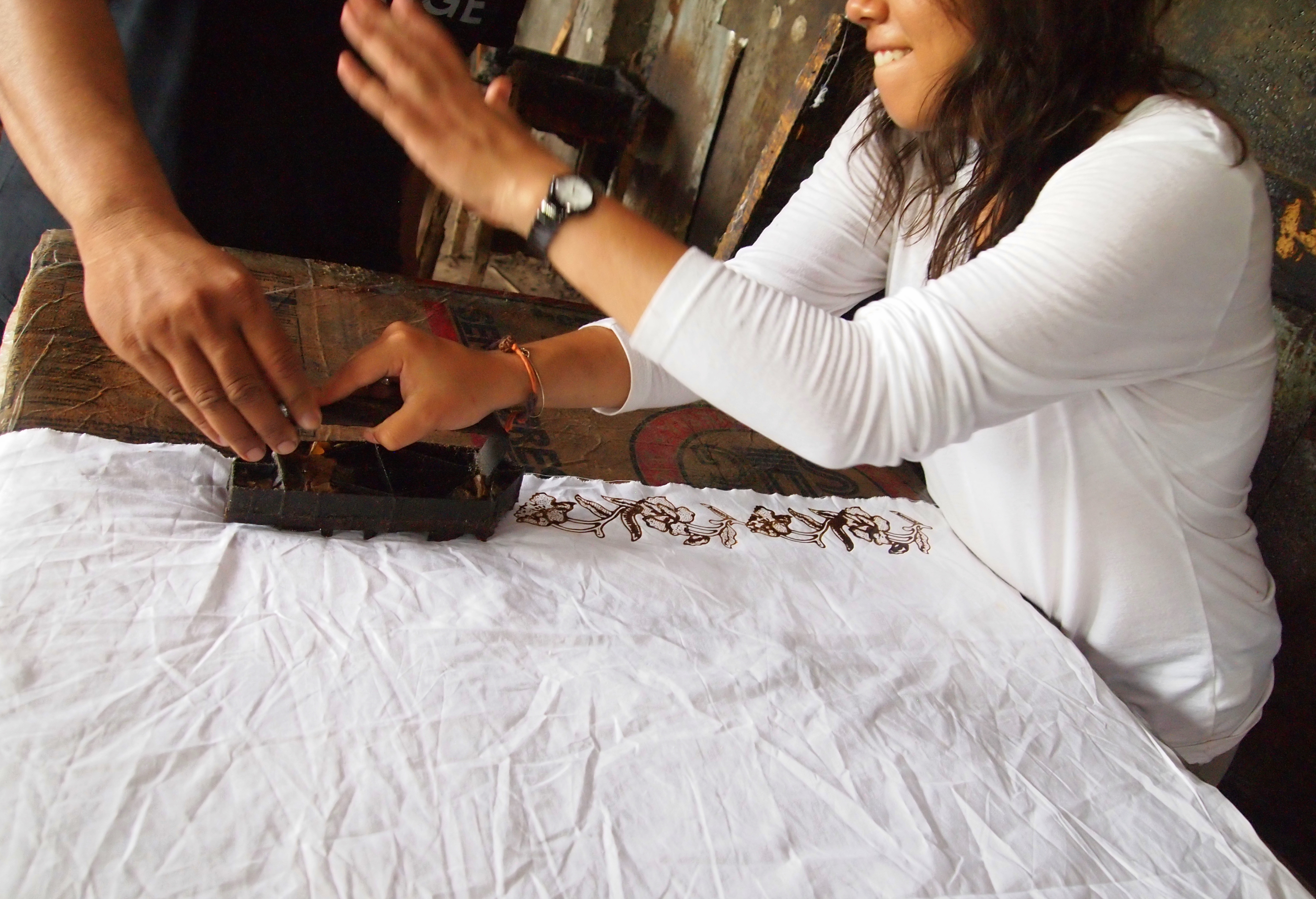
Block printer   Rashidji shares the stories of his past when a gesture or word of appreciation was being valued more than money, when the ideas springing out from dialogues mattered more than the amount of ‘production output’. He speaks with much consideration about his learning at Anokhi, his greatest inspiration and assures that there...
Jugalbandi in Ahmedabad

Jugalbandi in Ahmedabad

Jugalbandi: Designed and Made in Australia and India will be on display at the Design Gallery, National Institute of Design, Ahmedabad to accompany the Make it New Again: Models for Innovation in Traditional Craft conference 22-24 November. Jugalbandi will offer a taste of the creative partnerships currently developing between Australia and India, offering participants valuable...
Appropriation or Exchange?

Appropriation or Exchange?

Christian Thompson argues that use of Aboriginal design by high-end fashion studios like Rodarte demonstrates a respect for culture that continues to honour the human form. Rodarte fashion with Aboriginal designs Aboriginal art practices are part of a global economy and the recent collaboration between fashion designers Rodarte and the late Papunya Tula artist Benny...
Mutual Respect: Draft Standards for Product Development

Mutual Respect: Draft Standards for Product Development

Draft Standards for Best Practice in Transnational Craft-Design Partnerships Part 2 Protocols for producting Indigenous Australian visual arts This Best Practice document includes standards that help guide those seeking to ensure an ethical basis for product development involving designers and artisans. They pertain to situations where the concepts of a designer and craft skills of...
Make it New Again starts in Ahmedabad on 22 November

Make it New Again starts in Ahmedabad on 22 November

Make it New Again Make It New Again: Models for Innovation in Traditional Craft 22-24 November 2012 National Institute of Design, Ahmedabad, India Craft is a form of production that uplifts communities, tells stories that connect people together, and fills our world with beauty. India is a treasury of the world’s craft traditions, clothing, sheltering,...
UTS Fashion and Textile India Tour Exhibition

UTS Fashion and Textile India Tour Exhibition

See how the UTS textile and fashion students worked with artisans through the Happy Hands workshop in Delhi. 1-15 November 2012UTS Textiles Library, 730 Harris Street, Ultimo, DAB Building 6, Level 3, Room 346 Opening 1 November 12pm Nine UTS fashion and textile students embarked on a journey to India for a celebration of Australian...

The clay bridge between Australia and India

Sandra Bowkett will be talking at the Gold Coast Gallery on Saturday 25 August about her experiences as an Australian potter working in India. She’ll be preceded by Kevin Murray reflecting on the growing relational nature of craft practice, particularly in ceramics. He will explore the idea of clay as a lingua franca between difficult...
Jugalbandi opening in Sydney

Jugalbandi opening in Sydney

India / Australia / Design Jugalbandi & Cultural Textiles Jugalbandi: Designed and Made in India and Australia Cultural Textiles, COFA student research at India’s National Institute of Design Jugalbandi: Designed and Made in Australia and India is a series of exhibitions curated by Kevin Murray that profile the creative design dialogues currently in play between...
Chikankari–How to protect the fragile thread that connects generations

Chikankari–How to protect the fragile thread that connects generations

Minna Loft, a graduate from jewellery at Monash University, reflects on her recent experience learning about Indian crafts in northern India Tribal woman making figurines from rice grains, Orissa India never ceases to amaze me, continually impressive and unpredictable. The generosity that I have experienced in India is breathtaking. I recently headed back there for...
Carole Douglas builds partnerships for a less lonely planet

Carole Douglas builds partnerships for a less lonely planet

The Tree of Life and Death by Amjibah Purdisan Sodha for Resurgence, 2001 One of the greatest testimonies to Indian textiles is the deep commitment it solicits in others. Carole Douglas has dedicated many years of her life to honouring the craft traditions of Kutch – a remote desert area of NW India and sharing...